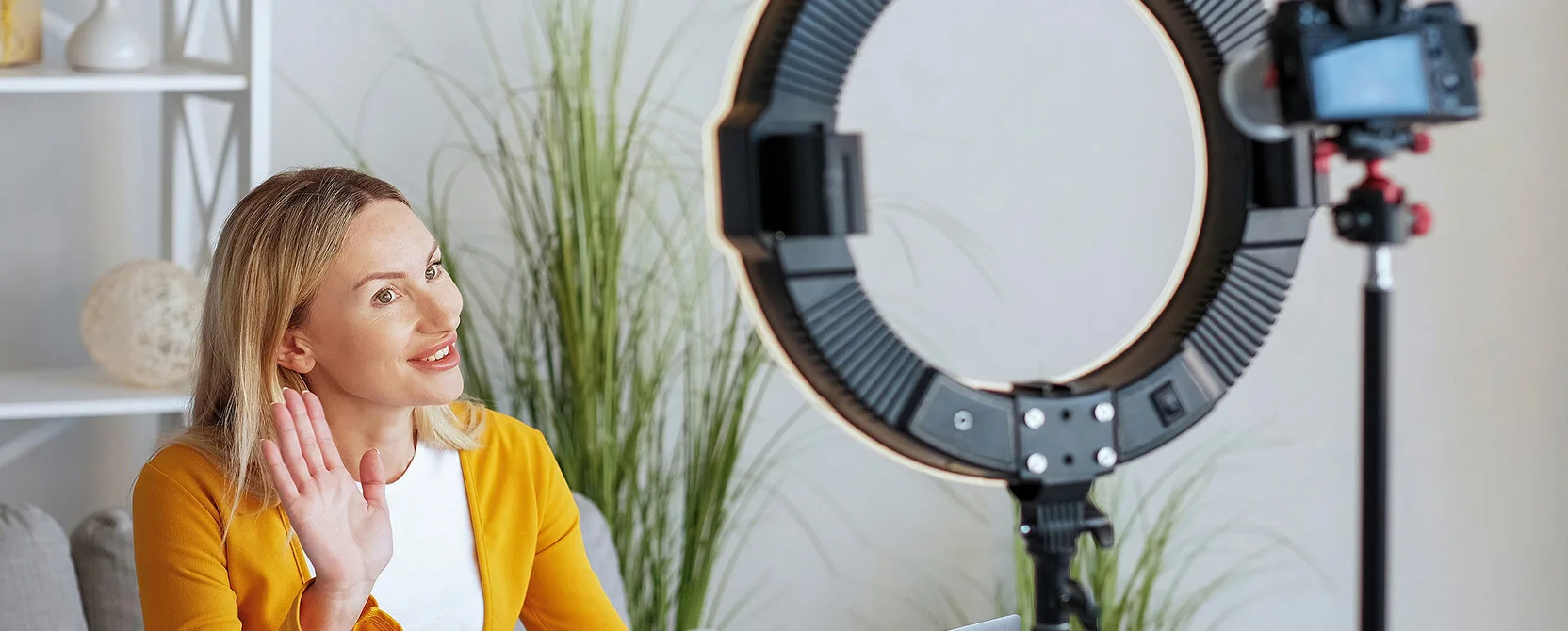
Going live can make a multifamily brand feel immediate, approachable, and human. It can also become a lot of effort for very little value if there is no useful topic, no clear audience, and no plan for what happens after the event.
In other words, the live button is not a strategy. The goal is to create a useful conversation that gives people a reason to show up, ask a question, and keep engaging afterward.
Choose the format after the audience
A resident question-and-answer session, a neighborhood conversation, a behind-the-scenes look at a new community, and an industry panel all have different jobs. Start by choosing one audience and one useful question. Then pick the format that fits.
For professional audiences, a scheduled LinkedIn Event can provide a clear registration and follow-up path. For resident or prospect audiences, a short live video or a focused virtual event may be more natural. Do not assume every community needs the same platform.
Plan a conversation, not a script
Give the host a simple run of show: an opening, two or three useful prompts, time for audience questions, and a close that tells viewers what to do next. The goal is to be prepared without sounding rehearsed.
Good prompts are specific:
- What should a renter know before touring this neighborhood?
- What is one question the leasing team hears every week?
- How does a particular amenity work in real life?
- What does the move-in process look like from the resident’s perspective?
Set guardrails before you go live
Decide who hosts, who moderates comments, who can answer policy questions, and what should be taken offline. Avoid discussing private resident information, unverified availability, or fair-housing-sensitive topics in an improvised way. If the team cannot answer a question accurately in the moment, it is better to say it will follow up through the proper channel.
Make follow-up part of the event
Live content has a short moment of attention, but the learning can continue. Afterward, share a brief recap, answer unanswered questions, and turn the strongest insight into a useful article, video clip, FAQ, or leasing resource. Keep only the claims that can be verified and the material you have the right to reuse.
Measure what the conversation accomplished
Use measures that match the goal. For a thought-leadership conversation, that may be registrations, engaged attendees, follow-up conversations, or qualified traffic to a relevant page. For a community event, it may be questions answered, post-event feedback, or a next-step action that the team can verify.
The best live conversations feel less like a broadcast and more like the beginning of a relationship. If people leave with a useful answer and a reason to continue, the event did its job.
Share This Article


Subscribe to our newsletter
Related Blog Posts